What is a flag of convenience?
· 4 min read
In short
A flag of convenience is the flag of a country whose ship registry accepts ships owned and controlled from somewhere else. The International Transport Workers’ Federation (ITF), which coined the list, defines it as a ship whose “beneficial ownership and control” lies outside the flag state. Owners choose these open registries for lower fees and taxes and more freedom over crewing; critics argue the link between ship and state is too weak to enforce standards. Panama, Liberia and the Marshall Islands, all on the ITF’s list, are the three largest registries in the world.
What a flag state does
Every merchant ship is registered in one country, its flag state, and sails under that country’s law. Under Article 94 of the UN Convention on the Law of the Sea (UNCLOS), the flag state must effectively exercise its jurisdiction and control over its ships in administrative, technical and social matters: surveys and certificates, crew qualifications, working conditions. Article 91 adds that “there must exist a genuine link between the State and the ship”.
The flag is visible in data: a ship’s MMSI and call sign are issued by its flag state, so their first digits or letters show the flag. Each flag has a Voydar page with its fleet, inspection record and sanctions exposure, for example Panama, Liberia and the Marshall Islands.
The ITF definition and list
The term is a campaigning one. In 1974 the ITF defined a flag of convenience ship as one where “beneficial ownership and control of a vessel is found to lie elsewhere than in the country of the flag the vessel is flying”. The ITF’s Fair Practices Committee decides which registries are on the list and adds or removes them from time to time; in 2025 it counted 48. The ITF names Panama, the Marshall Islands, Liberia, Malta and Antigua and Barbuda as the five with the most ships.
The shipping industry usually calls these “open registries” or “international registries”. The labels describe the same registries from different viewpoints: an open registry is one that accepts foreign-owned ships; “flag of convenience” adds the ITF’s view that it weakens the link between ship and state.
Why owners register abroad
- Cost: registration fees and annual tonnage taxes can be lower, and many open registries tax shipping income lightly or not at all.
- Crewing: open registries generally let owners hire crews of any nationality, where national registries may require a share of national seafarers.
- Speed and service: large open registries run offices around the world and can register a ship quickly.
- Finance and neutrality: banks lending against ships are familiar with the big registries’ mortgage law, and a neutral flag can be useful in trades affected by politics.
The criticism, made by the ITF and others, is that a registry with little connection to its ships may lack the means or the will to enforce safety, labour and environmental standards, and that it helps hide who really owns a ship. Performance varies widely between registries: port state control regimes publish each flag’s inspection and detention record, and several large open registries perform well there. Voydar’s flag pages show the detention rate for each flag from the inspections it holds.
Which flags the big ships fly
Live from VoydarShips of 5,000 gross tonnage or more with a valid IMO number in Voydar’s catalog, by the flag their AIS reports. 21,880 ships, 948,684,125 gross tonnage in total
| Flag | Ships | Share of gross tonnage |
|---|---|---|
| Liberia | 3,238 | 18% |
| Marshall Islands | 2,673 | 13% |
| Panama | 2,584 | 11% |
| Singapore | 1,473 | 8% |
| Hong Kong | 1,052 | 7% |
| Malta | 1,144 | 6% |
| Bahamas | 951 | 5% |
| Japan | 382 | 2% |
| Portugal | 711 | 2% |
| China | 547 | 2% |
| Greece | 273 | 2% |
| Denmark | 297 | 2% |
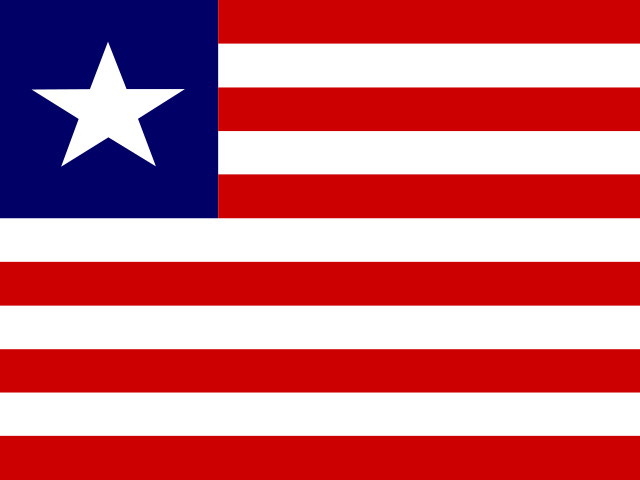 Liberia
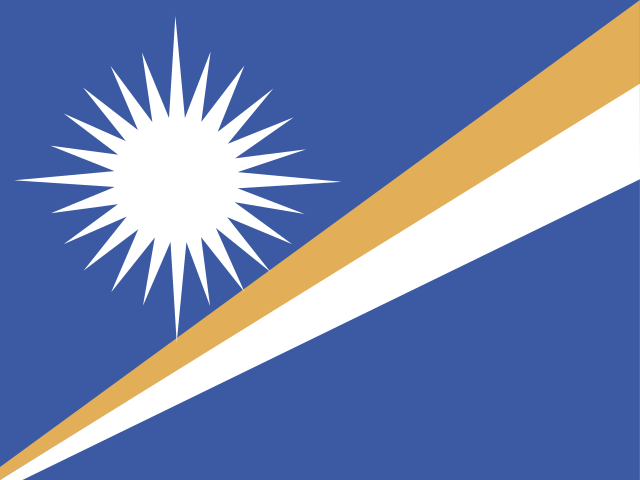 Marshall Islands
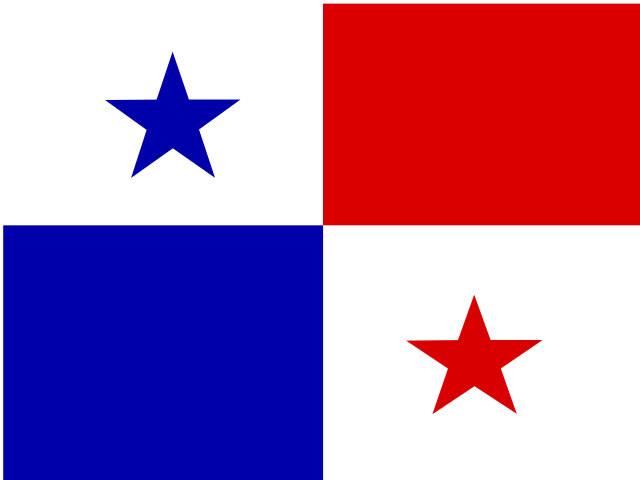 Panama
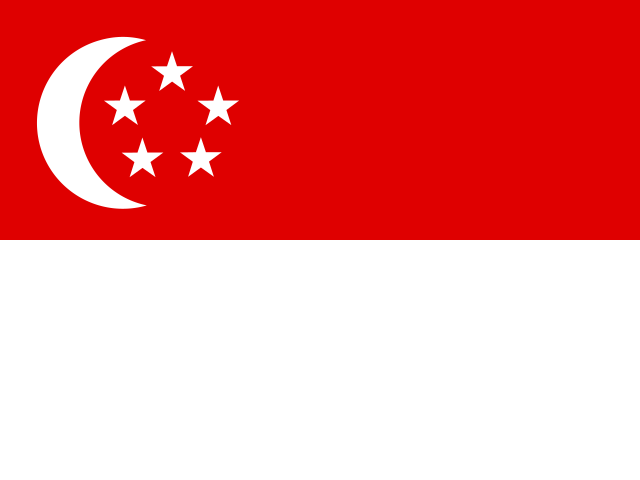 Singapore
 Hong Kong
 Malta
Malta Bahamas
 Japan
Japan Portugal
 China
China Greece
 Denmark
Voydar count. One row per IMO number (the most recently heard AIS identity), flag decoded from the MMSI. Voydar’s catalog is not the complete world fleet, so shares are indicative; UNCTAD publishes the official world figures. As of Oct 6, 2026, 10:06 UTC
Flag hopping and the shadow fleet
A ship can change flag in weeks. Most changes are ordinary business, following a sale or a change of manager. Repeated changes to small or unfamiliar registries, sometimes registries that turn out to be fraudulent, are one of the patterns associated with the shadow fleet of tankers used to evade sanctions. Voydar shows every flag a ship has broadcast in its identity history, and a ship’s page never calls a change of flag suspicious by itself.
Questions and answers
- Which countries are flags of convenience?
- The ITF keeps the list, with 48 registries in 2025. The largest by number of ships covered are Panama, the Marshall Islands, Liberia, Malta and Antigua and Barbuda. The ITF publishes the full, current list on its seafarers’ website.
- Is a flag of convenience illegal?
- No. Registering a ship in any state that accepts it is lawful. The debate is about whether the flag state then enforces international standards effectively, as UNCLOS requires.
- Why are so many ships registered in Panama, Liberia and the Marshall Islands?
- They are open registries that accept foreign-owned ships, with competitive fees and taxes, freedom over crewing and worldwide service. Together they account for a large share of world tonnage.
Look up a ship
Search any vessel by name, IMO number or MMSI for its free Voydar profile: live position, identity history, ownership, inspections and sanctions.
Sources
Primary sources for the facts in this guide. Figures labelled as Voydar data come from Voydar’s own records, with their method stated next to them.
- ITF: Flags of convenience
- UN Convention on the Law of the Sea, Articles 91 and 94
- UNCTAD: Review of Maritime Transport
Published Sep 28, 2026 · For information only. Not for navigation, and not a substitute for the official sources cited.